

Our passionate and dedicated team brings together a diverse range of skills and expertise to deliver exceptional results. From creative visionaries to meticulous strategists, we work seamlessly together to meet and exceed our clients’ expectations.
Leadership

Christopher Beevers, Ph.D.
Laboratory Director | Email: beevers@utexas.eduProfessor, The University of Texas at Austin
ORCID: https://orcid.org/0000-0002-4480-0902
Publications: Google Scholar
Christopher Beevers, Ph.D., director of the Mood Disorders Laboratory, received his doctorate in adult clinical psychology from the University of Miami in 2002. He completed his internship and post-doctoral training at Brown Medical School in Providence, Rhode Island and joined the psychology department at the University of Texas in January 2005. He has received the President’s New Researcher Award from the Association of Behavioral and Cognitive Therapy and was a Beck Scholar at the Beck Institute for Cognitive Therapy and Research. He is currently Associate Editor at Clinical Psychological Science and a member of several editorial boards for leading journals in his research area, including the Journal of Abnormal Psychology and Cognitive Therapy and Research. Dr. Beevers’ primary research interest focuses on the cognitive etiology and treatment of major unipolar depression. He is very interested in using experimental psychopathology methods to identify factors that maintain depression and translating these findings into effective interventions for depression and related psychopathology (e.g., anhedonia, negative affect).

Jason Shumake, Ph.D.
Research Faculty/Post-Docs | Email: shumake@utexas.eduBiostatistician / Research Assistant Professor
Jason Shumake received his doctorate in psychology from the University of Texas in 2004, with a concentration in behavioral neuroscience and a supporting portfolio in statistics and computational modeling, and he completed his postdoctoral fellowship at the Leibniz Institute for Neurobiology in Magdeburg, Germany, in 2007. Dr. Shumake’s primary research interest is building models from longitudinal data sets to classify and predict behavior and responses to interventions. He is excited by the advancement of personalized medicine through data science, which he believes is critical for translating prediction research into individualized treatment recommendations. He is particularly interested in using statistical and machine learning algorithms to search for novel combinations of genetic, neural, and behavioral features that predict treatment response. His current projects involve mining anatomical and functional brain imaging data, eye tracking data, and psychometric data from depressed individuals to predict longitudinal mood changes that occur both naturalistically and in response to antidepressant medication and cognitive therapy.
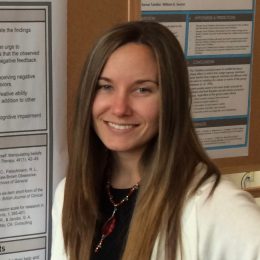
Rochelle (Shellie) Stewart, Ph.D.
Post-Doc | Email: rochelle.stewart@utexas.eduPost-Doctoral Research Fellow
Rochelle (Shellie) Stewart received her B.A. in Psychology from The University of Texas at Austin. Following graduation, she worked as a project coordinator in the Mood Disorders Laboratory, managing clinical research on the cognitive and neurobiological mechanisms of depression. Shellie went on to earn her Ph.D. in Clinical Psychology from Florida State University, where her graduate training emphasized advanced quantitative methods and multimethod, multilevel approaches to studying psychopathology. She completed her predoctoral clinical internship at the Michael E. DeBakey VA Medical Center in Houston before returning to the Mood Disorders Laboratory as a postdoctoral fellow.
Shellie’s research seeks to better characterize psychological processes relevant to psychopathology through the use of diverse measurement and analytic approaches. Her previous work has examined the structure and measurement of transdiagnostic dimensions of psychopathology and their associations with neurophysiological and behavioral indicators. Her current research focuses primarily on depression and seeks to understand how cognitive and behavioral processes unfold dynamically over time. In particular, she is interested in using eye tracking to characterize the temporal dynamics and underlying patterns of attention to emotional information. More broadly, Shellie is interested in developing and applying novel approaches to uncover clinically relevant psychological processes that may be difficult to capture using traditional measures and analytic methods.
Graduate Students
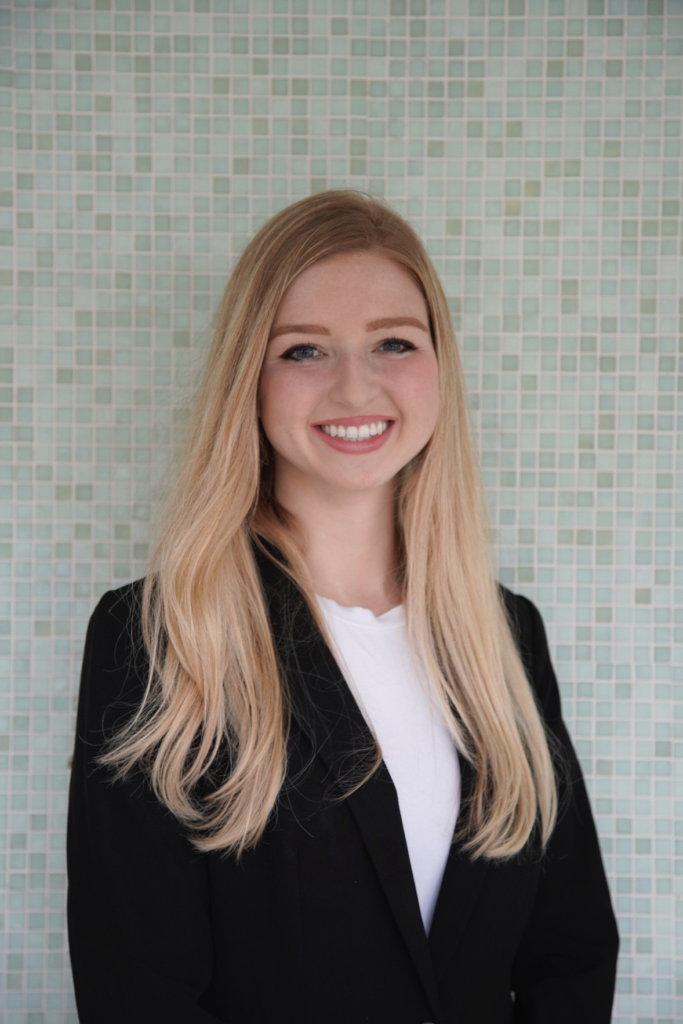
Claire Landon, B.S.
Email: clandon@utexas.eduClaire received her bachelor’s degree in Psychology with a minor in Mathematics from the University of Miami in 2021. After graduation, she worked as a Registered Behavior Technician, providing Applied Behavior Analysis therapy to children on the autism spectrum. She then worked as the lab manager for Dr. Aaron Heller’s Miami Affective Neuroscience And Translational Experimental Enterprise lab, where she managed several studies using ecological momentary assessment and multimodal data collection, including repeated self-reports, GPS tracking, audio recordings, and physiological data collected via wearable devices.
Claire joined the Mood Disorders Laboratory in 2025. Her research interests focus on the cognitive and emotional processes underlying the development and maintenance of depression and anxiety. She is particularly interested in how biases in learning and memory contribute to the formation, persistence, and updating of negative beliefs and expectations.
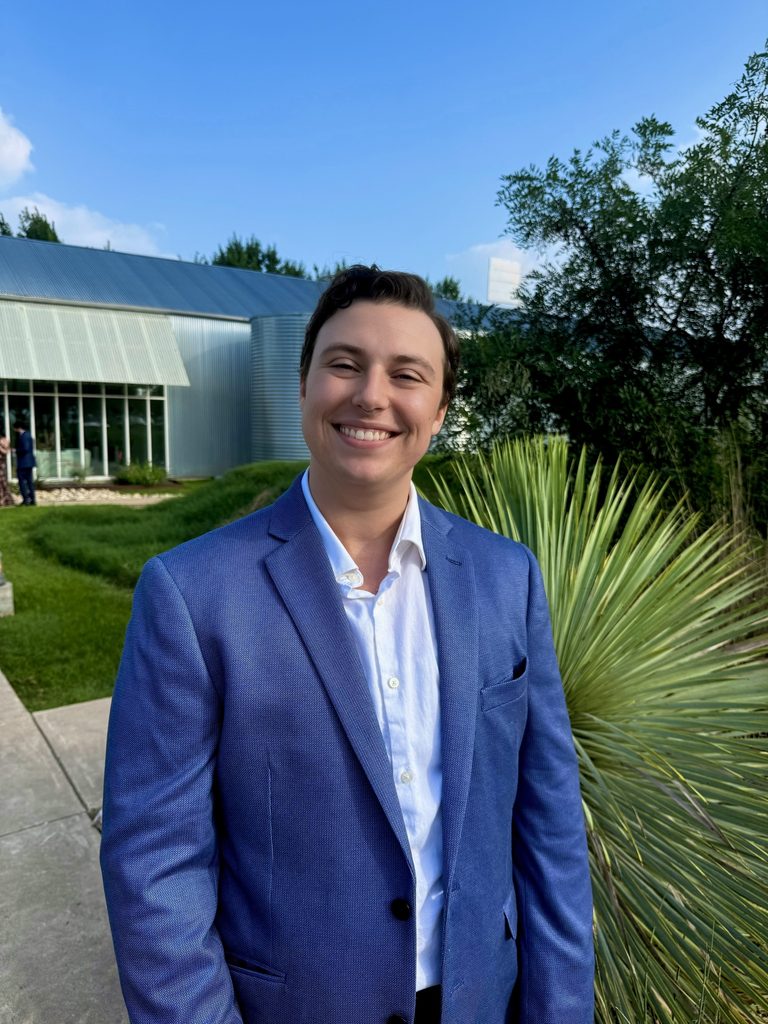
Olivia Brady, M.A.
Email: omb374@my.utexas.eduOlivia graduated from Willamette University in 2021 with a degree in psychology. Their undergraduate research focused on intensive longitudinal methodology investigating personality change. After graduating, Olivia worked at a suicide hotline for several years and assisted with projects in the SNACK lab at Oregon Health and Science University.
Olivia joined the Mood Disorders Lab in their 3rd year of doctoral training in 2025. They are interested in individual differences and variability of suicidal ideation, and how emotions influence the trajectory of ideation.

Andrew Levihn-Coon, B.A.
Email: alevihncoon@utexas.eduAndrew graduated from Claremont McKenna College in 2015 with a B.A. in Psychology and Philosophy. After graduating, he was a research coordinator for Mark Powers, Ph.D., and Jasper Smits, Ph.D., at The University of Texas at Austin where he coordinated two randomized controlled trials examining the efficacy of virtual reality as treatment for arachnophobia and as a pain management intervention for hospital patients at Dell Seton Medical Center. At UT he also assisted in projects examining treatments for social anxiety, PTSD, panic attacks, and smoking cessation, with an emphasis on CBT and exercise augmentation. Andrew then worked as a clinical research coordinator for Anne Richards, M.D., M.P.H., at UCSF and the San Francisco VA Medical Center coordinating a randomized placebo-controlled clinical drug trial of doxazosin for PTSD nightmares, sleep disturbance, and overall PTSD symptoms.
Andrew joined the Mood Disorders Laboratory in 2019. He is deeply interested in improving treatments for depression with a focus on behavioral change interventions that target exercise, sleep, diet, and social engagement. He is also interested in using mobile sensing data to personalize treatments for depression and to study a treatment’s effectiveness. Andrew remains passionate about reducing the stigma of mental illness so more patients in need seek effective evidence-based treatments.

Rachel Weisenburger, B.A.
Email: rachelweisenburger@utexas.eduRachel graduated from the University of Washington, Seattle, with a dual degree in Psychology and the Comparative History of Ideas in 2017. While at UW, she worked as a research assistant in Dr. Katie McLaughlin’s Stress and Development Lab and in the Department of Psychiatry’s Division of Public Behavioral Health and Justice Policy. After graduating, Rachel spent a year serving as an AmeriCorps Volunteer in Nashville, TN, where she worked as a college access counselor. Rachel then joined the Stanford SNAP Lab as a research coordinator, where she managed a longitudinal study examining the effects of early life stress on neurobiological, behavioral, and cognitive development across adolescence.
Rachel joined the Mood Disorders Laboratory in 2021. She is interested in the role cognitive biases play in the development and maintenance of depression, and how these biases impact the way people think about themselves and their interpersonal relationships. Rachel is also interested in psychopathology classification and utilizing dimensional and symptom-level approaches to studying depression in her research.
Research Staff & Volunteer Research Assistants

Beatrice Fadrigon, MIMS
Lab & Study Coordinator | Email: fadrigon@utexas.eduBeatrice graduated from University of Pittsburgh with a Bachelor’s of Science in Psychology. There, they researched how youth developed their racial consciousness in the CAMBIAR Collective Lab which has since moved to the University of Illinois, Chicago. They also completed their own studies on the LGBTQ+ community, mental health, and technology. Later, they graduated from University of California, Berkeley with a Masters in Information Management and Systems.
Beatrice joined the lab in 2023 and is interested in how technologies can be used for social good and mental health. They hope to pursue a PhD one day.

Ariel Tseng, B.A.
Lab & Study Coordinator | Email: arieltseng@utexas.eduAriel graduated from University of California, Davis in 2018 with a BA in Psychology and a minor in Human Development. After graduating, she spent three years working as a psychological technician supporting outpatient mental health services for injured workers at the Trauma and Stress Recovery Center in Oakland, CA. Ariel then began working as a lab manager in the Youth Development in Diverse Contexts Lab at Fordham University, where she coordinated an R01 longitudinal study investigating race-related sleep disparities.
Driven by her interest in experimental methods and treatment interventions for depression, Ariel joined the Mood Disorders Lab in Spring 2024 to further enhance relevant research skills and knowledge. She plans to pursue a PhD in Clinical Psychology, envisioning a future where research and clinical practice intersect to address challenges in depression treatment, particularly within marginalized communities.
Hanah Stokke
Volunteer RA since Fall 2024Psychology Major, Class of 2026
Niyati Jain
Volunteer RA since Summer 2025Psychology Major, Class of 2027
Anukriti Srivastava
Volunteer RA since Spring 2026Psychology Major (B.S), Class of 2027
Muntaha Ali
Volunteer RA since Summer 2026Human Biology Major, Class of 2028
Om Patidar
Volunteer RA since Summer 2026Neuroscience Major, Class of 2026
Brooke Willingham
Volunteer RA since Spring 2026Psychology Major, Class of 2027
Sienna Chae
Volunteer RA since Summer 2026Psychology Major, Class of 2028